How to Protect Your Child’s Brain in Contact and Collision Sports
The most effective way to protect a child’s brain in contact and collision sports is to reduce the rotational forces transmitted to the brain during concussive and sub-concussive head impacts.
Concussion identification and removal-from-play protocols are important, but they only address brain injury after symptoms appear or brain injury is suspected. Many head impacts, sub-concussions, in youth sport cause no symptoms yet still damage the brain. Reducing cumulative exposure to these sub-concussive impacts is critical.
What causes brain injury in children’s contact and collision sports?
Brain injury in children’s sport is not limited to diagnosed concussions. There is a significant lack of awareness of possibly the greatest threat to the brain in contact and collision sports: Sub-concussions.
Sub-concussion results from an impact of lower force than required to cause a concussion. Sub-concussive impacts are 500 times more frequent than impacts which result in concussion. A sub-concussion causes damage to the brain without any symptoms.
Whilst an individual sub-concussion is asymptomatic; multiple sub-concussions can adversely affect memory, the ability to focus, learn and think as well as behaviour [1].
In every concussion and sub-concussion there are rotational forces present, these cause the brain to rotate inside the skull. This is associated with tearing of tiny blood vessels and brain cells resulting, over time, in the breakdown of the blood-brain barrier and the creation of damaging neuro-inflammation [2].
This results in an abnormal and harmful uncontrolled inflammation which damages the brain and increases the risk of longer-term neurodegenerative consequences including Chronic Traumatic Encephalopathy (CTE), motor neurone disease (MND), and Parkinson’s.
What are sub-concussions and why do they matter for children?
A sub-concussion is a head impact that causes no visible signs or symptoms of concussion, but still damages the brain [3].
Key facts:
- Sub-concussive impacts are estimated to be hundreds of times more frequent than concussions
- They occur routinely during training and matches
- They are not recognised, diagnosed, or managed at the time they occur, or typically after
Because children’s brains are still developing, repeated exposure to these impacts is particularly concerning. Sub-concussions are now understood to be a major driver of cumulative brain injury risk in youth sport.

Why concussion protocols alone are not enough
Messages such as “If in doubt, sit them out” play an important role in identifying symptomatic concussions. However, they do nothing to address sub-concussive impacts.
This creates a gap:
- Concussions are managed after injury has occurred
- Sub-concussions occur silently and repeatedly
- Brain injury risk accumulates without triggering removal from play
- Sub-concussions remain outside the education focus for parents, coaches and players
Detection does not protect the brain. Protection must reduce the forces reaching the brain in the first place.

Why children are more vulnerable to brain injury
Children are not just “small adults” when it comes to brain injury risk [4].
Research shows:
- A child’s brain is more susceptible to rotational forces
- Brain development is ongoing
Crucially, we do not know:
- Which child has genetic or metabolic risk factors
- Which child will continue playing sport into adulthood
- Which child may suffer cumulative effects decades later
Because brain injury risk is cumulative, early exposure matters and damages.
Why conventional headgear does not protect the brain
Most traditional youth sports headgear is designed to reduce cuts, abrasions, surface injury, and absorb some linear force.
However, linear force reduction does not adequately address rotational brain injury.
Biomechanics research shows that:
- Rotational acceleration causes greater brain tissue strain
- Foam padding and viscoelastic foam have a limited ability to reduce rotation
- Added mass and surface area can increase rotational torque
This explains why padded headgear has not been shown to meaningfully reduce concussion risk [5].

How can brain injury risk be reduced for children in sport?
Reducing brain injury risk requires focusing on the mechanism of brain injury and the physicality of the brain, not just visible symptoms.
Effective strategies include:
- Reducing rotational force transmission to the brain
- Lowering cumulative exposure across training and matches
- Using equipment designed specifically for brain protection
Protective strategies should be applied early and consistently, not only after an injury has occurred or in later years.
How Rezon Halos® helps protect the brain
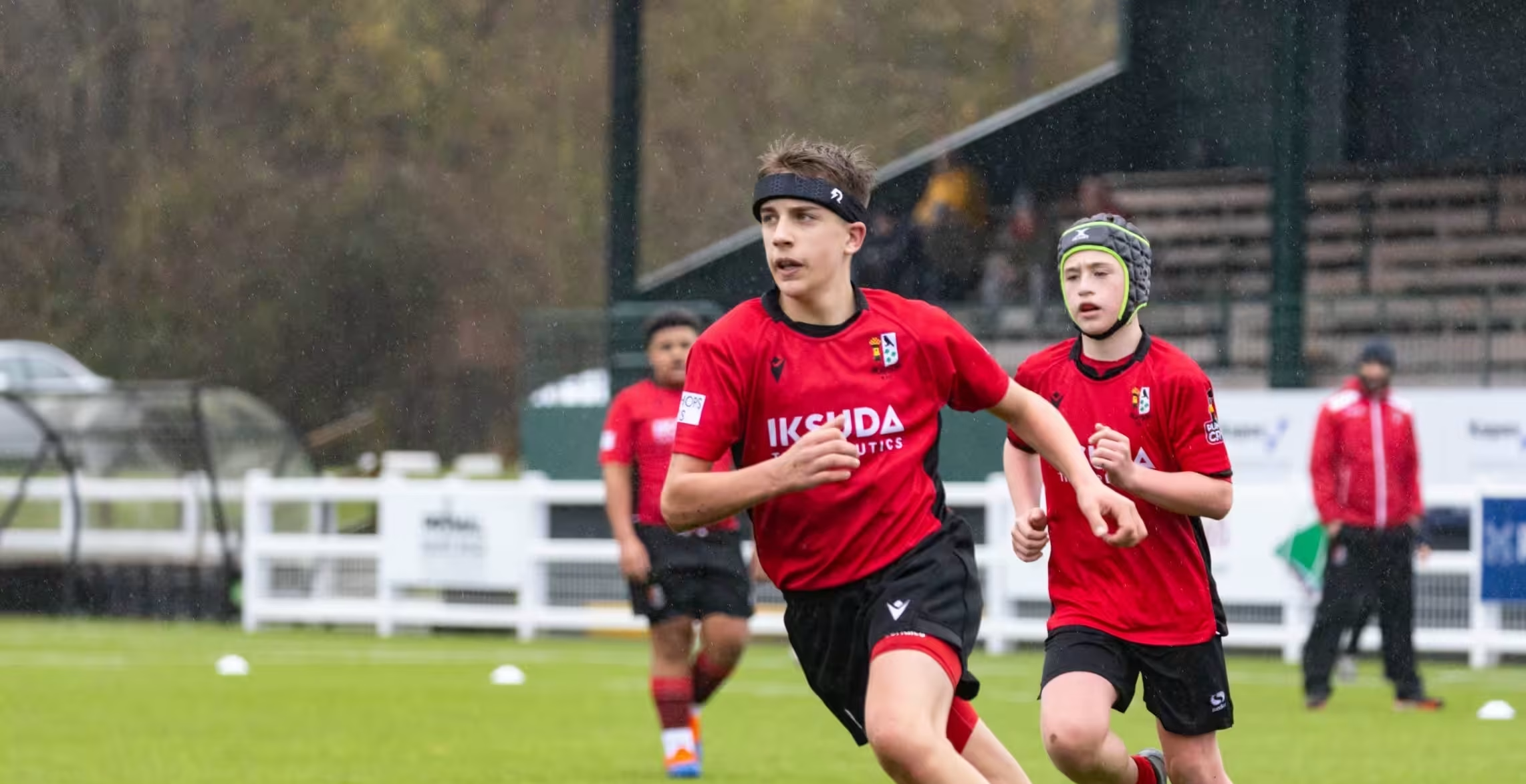
Rezon Halos® is designed specifically to reduce rotational force transmission to the brain.
Key features:
- CE / UKCA Category II PPE certified (the legal standard for protective headwear beyond cuts and scrapes)
- Independently tested and five star rated using the Virginia Tech Helmet Lab methodology
- Proven to reduce rotational forces by at least 60%
- Proven to reduce concussion risk by 74% in laboratory testing [6]
Halos® works by reducing the forces transmitted to the brain during both concussive and sub-concussive impacts, helping lower cumulative brain injury risk.

Should children wear brain protection throughout play?
Yes.
Brain injury risk is not confined to major collisions or matches.
Sub-concussive impacts occur during:
- Training sessions
- Drills
- Scrimmages
- Matches
Because risk accumulates over time, protection is most effective when worn consistently, not selectively.

Frequently Asked Questions
👉 Learn more about Rezon Halos® and evidence-based brain protection for children in sport here.
-
- Brain injury science. Further reading. Rezon.
- Biomechanical investigation of head impacts in football. British Journal of Sports Medicine.
- What are sub-concussions? Further Reading. Rezon.
- Understanding brain injury in youth sport. Further Reading. Rezon
- Star Rating Framework. Virginia Tech Helmet Lab.
- Independent product testing. Further Reading. Rezon.
Author: Alex Reily