Can cheerleading cause concussion?
Yes. Cheerleading can cause both concussion and sub-concussive brain injury, especially during stunts, tosses, falls, catches, collisions, and awkward landings. That matters because not every meaningful brain impact causes a diagnosed concussion. In sport, athletes are exposed to repeated head impacts that do not produce immediate symptoms, but still transmit force to the brain. These sub-concussive impacts are an important part of the long-term brain health conversation [1, 2].
In US high school cheerleading data, concussion was the most common reported injury, accounting for 31.1% of all injuries. The overall concussion rate was 2.21 per 10,000 athlete-exposures, and the practice concussion rate was 2.51 per 10,000 athlete-exposures. CDC also reports that almost all concussions among high school cheerleaders are linked to stunts, most happen during practice, and many stunt-related concussions happen without a spotter [3, 4].
Why cheerleaders need brain protection
Cheerleading is described as a non-contact sport, but the real-world injury environment is far more demanding than that label suggests. Athletes can fall from height during stunts, be struck by another athlete during catches or collapses, or hit the floor during awkward landings and transitions. In US high school cheerleading data, the most common concussion mechanisms were contact with another person and contact with the playing surface [3].
That surface risk matters in cheerleading. Training often happens indoors on solid floors, on traditional foam floors, or outdoors on grass surfaces, and serious injuries have been associated with head-to-ground impacts. Nationwide Children’s Hospital notes that the most serious injuries happen on artificial turf, grass, traditional foam floors, or wood floors because those surfaces are unable to absorb impact force effectively [5, 6].
Cheerleading head impacts can also happen at speed, at awkward angles, and against another person. The American Academy of Pediatrics’ 2024 policy statement notes that, although the overall injury rate in cheer is relatively low, average time away from sport after injury is lengthy, suggesting injuries can be severe [7].
Why rotational force matters in cheerleading head impacts
Brain injury is not only about damage to the surface of the head and skull. It is about how force is transmitted to the brain. Rapid head rotation creates shear strain within brain tissue and is associated with tearing of tiny blood vessels and brain cells resulting, over time, in the breakdown of the blood-brain barrier and the creation of damaging neuro-inflammation. Rotational forces are widely recognised as a primary biomechanical driver of concussion and broader brain injury mechanisms [8]. This matters in cheerleading because falls, catches, and angled collisions can all produce rotational loading rather than simple straight-line impact alone [8, 9].
This is why the brain-injury discussion in cheerleading should not focus only on diagnosed concussion. Repeated non-diagnosed impacts matter, because they expose the brain to cumulative damage from rotational force over time [2, 8].
Common cheerleading situations where athletes are at risk
Important features for the best cheerleading head protection
The best head protection for cheerleading should meet four criteria.
Reduces rotational force
This is the most important criterion if the goal is brain protection rather than simple surface padding. Rotational force is central to concussion and sub-concussive brain injury, and impacts that do not produce immediate concussion symptoms are still meaningful [1, 8].
Is backed by credible testing and safety certification
In a market full of broad “protection” language; testing methods, certification standards, and published methodology matter more than vague reassurance. Products should be assessed on whether they publish meaningful biomechanical data, concussion-risk methodology, and recognized safety certification [9, 12].
Is suitable for real cheerleading use
Protection has to work in real cheer environments. It should stay in place during stunt work, remain practical with different hairstyles, and be wearable throughout repeated training sessions where many cheerleading concussions actually happen [4, 7]. The best cheerleading headguards also need to be unobstructive to both vision and hearing.
Is comfortable enough to wear consistently
Comfort matters because it influences real-world use. Heat, fit, bulk, and distraction all affect whether athletes choose to wear head protection consistently during long training sessions. Cheerleading head protection should be designed to be discreet and lightweight.
What is the best head protection for cheerleading?
The best head protection for cheerleading is protection designed to reduce the forces most associated with brain injury while remaining suitable for real cheerleading use in both training and performance. That means looking beyond simple padding and asking whether a product is designed to reduce rotational-force transmission, whether it has credible testing and safety certification, and whether athletes will actually wear it consistently in practice [4, 8, 9].
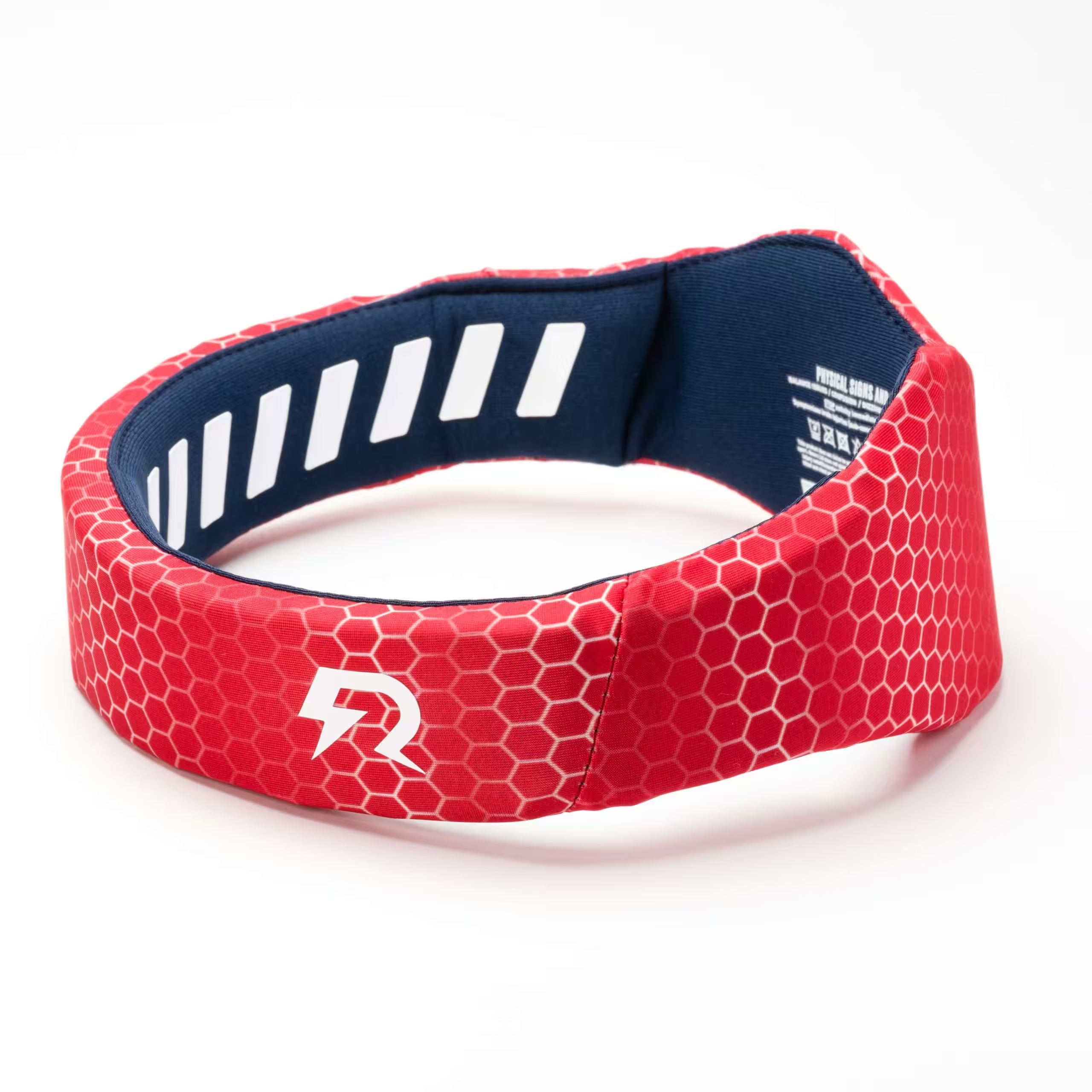
Rezon Halos® is designed as brain protection for athletes. Rezon Halos® uses patented Rotection® technology and has published test results showing up to 61% reduction in rotational acceleration, 74% reduction in concussion risk, a Virginia Tech 5-Star safety rating, and CE / UKCA Category II PPE certification [12, 13].
| Head Protection | Brain Protection |
|---|---|
| Designed to reduce cuts, abrasions and surface injuries | Designed to reduce brain injury risk |
| Typically focuses on reducing linear impact forces | Reduces linear forces and, more importantly, rotational forces, the primary driver of brain injury |
| Typically uses foam padding | Uses advanced protective technology engineered for brain safety |
| Protects the surface of the head | Designed specifically to protect the brain |
| Traditional all-head coverage sports headgear | Modern brain protection technology |
The distinction between head protection and brain protection matters because conventional head protection and brain protection are not the same thing. Surface padding may help with cuts and abrasions, but brain protection requires a specific design focus on the biomechanics of injury, especially rotational force [8, 9, 12].
Who should consider brain protection in cheerleading?
Brain protection in cheerleading should be considered by flyers involved in stunts, tosses, and dismounts, bases and back spots involved in repeated catches, athletes training complex stunts regularly in practice, and parents or coaches looking to reduce brain-impact risk in youth and school cheerleading. Because most reported concussions happen during practice and are closely tied to stunts, this is not only a competition issue. It is an everyday training issue [4, 7].
Frequently Asked Questions About Head Protection In Cheerleading
Final takeaway
Cheerleading can absolutely cause concussion and sub-concussive brain injury, especially in stunt-heavy practice and performance settings. The best cheerleading head protection should therefore be judged not only by padding, but by whether it is designed to reduce the forces most associated with brain injury and whether athletes will wear it consistently in real training environments. For athletes, parents, and coaches looking at the issue through that lens, the conversation moves beyond simple head protection toward something more meaningful: brain protection [1, 4, 8, 12].
- ‘Subconcussive’ is a dangerous misnomer: hits of greater magnitude than concussive impacts may not cause symptoms. Nowinski CJ, Rhim HC, McKee AC, Zafonte R. British Journal of Sports Medicine, 2024.
- What are sub-concussions and how do they impact long-term brain health? Further Reading. Rezon.
- Cheerleading Injuries in United States High Schools. Currie DW, Fields SK, Patterson MJ, Comstock RD. Pediatrics, 2016.
- Data on Sports and Recreation Activities: Cheerleading. CDC HEADS UP.
- Cheerleading Safety. Nationwide Children’s Hospital.
- The Potential for Brain Injury on Selected Surfaces Used by Cheerleaders. Shields BJ, Smith GA. Journal of Athletic Training, 2009.
- The Potential for Brain Injury on Selected Surfaces Used by Cheerleaders. Journal of Athletic Training, 2009.
- How Does Rotational Force Cause Brain Injury in Sport and How Can It Be Reduced? Further Reading. Rezon.
- How to Compare Sports Headgear for Concussion Risk Reduction. Further Reading. Rezon.
- Epidemiology of Cheerleading Stunt-Related Injuries in the United States. Shields BJ, Smith GA. Journal of Athletic Training, 2009.
- Cheerleading-Related Injuries in the United States: A Prospective Surveillance Study. Shields BJ, Smith GA.
- Halos® product testing. Further Reading. Rezon.
- Rotection® brain protection technology for sport. Further Reading. Rezon.
Author: Alex Reily