Rugby on Trial
The BBC documentary Rugby on Trial took focus on concussion in rugby and the effects of neurodegenerative disease in former professional and semi-professional players. But the consistent message from players and experts was that this is not about rugby or professional sport, or male players; it’s about “hits to the head”, and the “non-concussive, non-symptomatic” – sub-concussions.
Like other programmes, it again questioned the degree to which rugby authorities bear responsibility for the increasing prevalence of neurodegenerative disease amongst former players, and what knowledge they had at the time.

“It’s just the hits to the head, it doesn’t have to cause a concussion. It’s the hits that are non-concussive, non-symptomatic, that over time create this disease [CTE].”
Professor Ann McKee, world-renowned neuropathologist, Rugby on Trial – BBC documentary
Sub-concussions
The Rugby on Trial programme began to explain what a sub-concussion is, and why this is the crux of the global problem of brain injury in contact and collision sports. We want to expand on sub-concussion in sport and explain how children, adults, men and women can protect their brains from impacts and the consequences of “hits to the head” at all levels of sport.
Sub-concussion results from an impact of lower force than required to cause a concussion. Sub-concussive impacts are 500 times more frequent than impacts that result in concussion. A sub-concussion causes damage to the brain without any symptoms. Sub-concussions happen in every sport at every level, not just rugby!
While not every sports player will suffer a concussion, they will typically take hundreds, and even thousands of sub-concussions every season. Whilst an individual sub-concussion is asymptomatic, multiple sub-concussions can adversely affect memory, the ability to focus, and to learn and think, as well as behaviour.

CTE
Everyone knows and agrees that concussions are not good for the brain; but it is less well known that the accumulated damage of sub-concussions (and not concussions) contributes to later-life mood and behaviour problems including Chronic Traumatic Encephalopathy (CTE). This is a progressive neurodegenerative disease that leads to early-onset dementia in someone’s 20s/30s/40s and was highlighted by the testimonies of Neil Clarke and Jason Hobson in the programme.
While better player welfare in professional rugby is advocated around reducing contact loads in training, fewer games, and longer recovery periods post concussions, these somewhat miss the point on reducing the risk of neurodegenerative disease like CTE, as they are arguably late-stage measures. Why? Because sub-concussions are incurred in their hundreds, thousands and even hundreds of thousands from childhood playing. It is the accumulated damage of the sub-concussions in head-to-knee, head-to-ground, head-to-head, head impacts across sports that leads to damaging neuro-inflammation.
CTE starts young, in school and grassroots sports, and with teenagers having been diagnosed with the disease. The longer the focus stays only on concussion, the less will be given to sub-concussions and the more they will remain hidden in plain sight.
Rezon Halos®
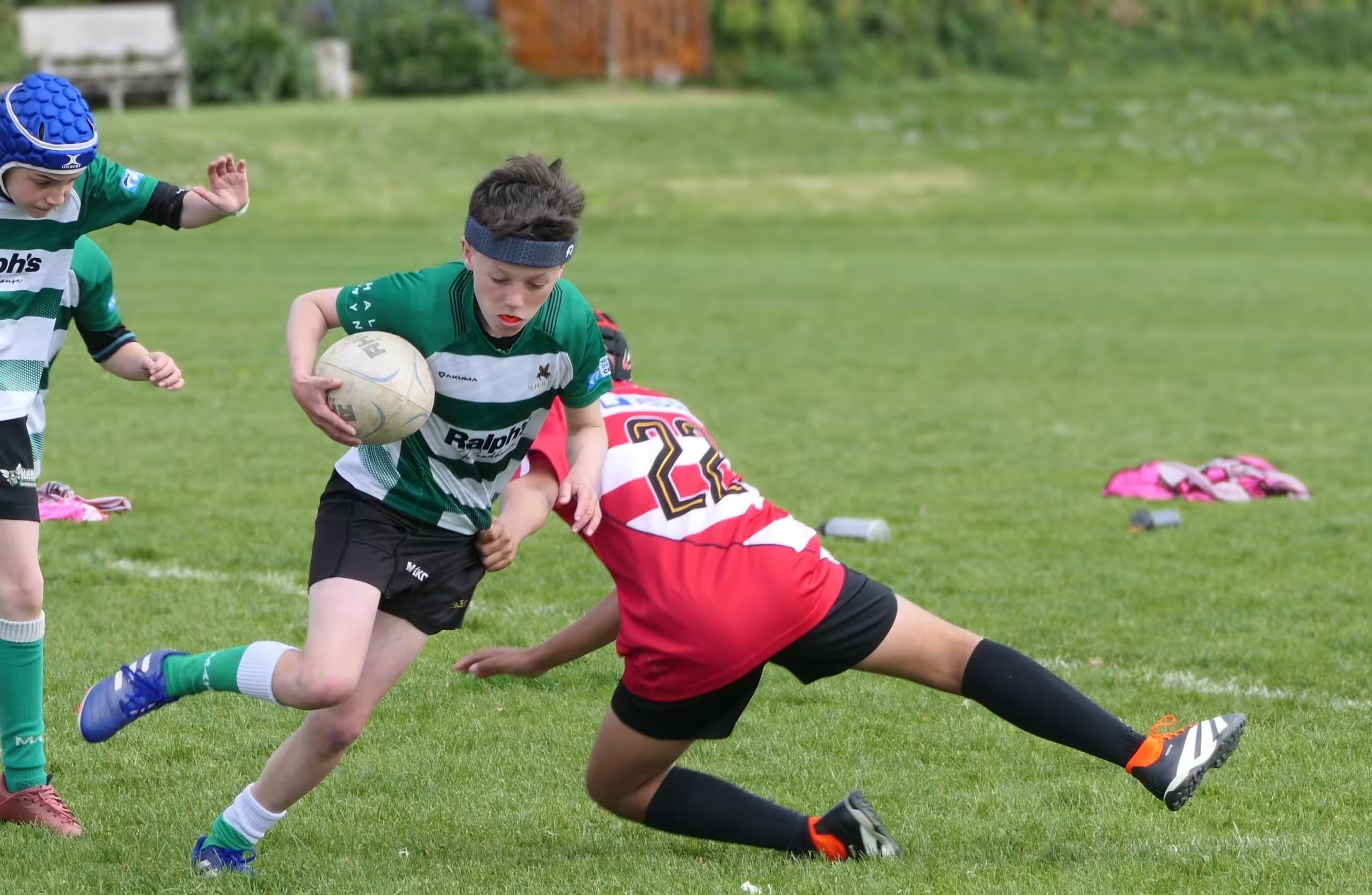
For those watching and wondering what can be done? How can sports be safer regarding brain injury and their long-term consequences? Nothing was offered up. With Rezon, our focus is brain protection in sport. We have been focused on understanding the mechanics of brain injury in regard to sub-concussions, and the physicality of the brain to rotational forces. These forces are present in every concussion and sub-concussion, they cause the brain to rotate inside the skull. This is associated with the tearing of tiny blood vessels and brain cells resulting over time in the breakdown of the blood-brain barrier and the creation of damaging neuro-inflammation.
Halos®, created by Rezon, is a protective headband for use across all sports that reduces rotational forces by up to 61%, protecting the brain in concussion and sub-concussion. So, for parents, coaches, schools, sports teachers, and players – brain protection does exist and the choice on brain health is yours.

Author: Judith McMinn