Can football cause brain injury through heading and repeated impacts?
Yes. Football can expose players to brain injury risk through collisions, falls, and repeated head impacts, including heading. Even when head impacts do not cause concussion symptoms, repeated small force impacts still affect the brain over time, which is why sub-concussion exposure has become an important area of concern for amateur and professional players.
Overview
The long – and short-term effects of head impacts are becoming a bigger talking point in football (soccer) by the week. While potentially lethal brain injuries – such as those suffered by former Chelsea goalkeeper Petr Čech or Spurs midfielder Ryan Mason – have always been a concern, the longer-term impacts of average, game-to-game brain trauma are beginning to be taken more seriously.
This is due to an increasing number of former players being diagnosed with Chronic Traumatic Encephalopathy (CTE) and the premature death of former football players.
In football, brain injury has become overly focused around heading the ball. With increasing concern on heading in the game, there have been calls to limit heading and to ban it outright. But this is more than heading. The real issue is rotational forces to the brain from concussion and sub-concussive impacts. Rotational forces occur from angled hits to the head, be it head-to-head, head-to-ball, head-to-ground impacts, all of these cause the brain to rotate inside the skull and brain cells to shear in a twist-like movement. Heading accounts for only 13% of impacts based on the study of mechanics of head impacts in football [1]. 87% of angled impacts to the head come from other sources, e.g., head to head, head to knee, head to elbow, foot and hand. Focusing on heading is really missing the point on wider brain injury and CTE in football.
Another confusion in this debate around brain trauma in football is that former players have CTE with young-onset dementia, and not dementia as is understood in the context of ageing. Dementia is an umbrella term, not a specific condition, and refers to a number of cognitive symptoms. A lack of understanding between CTE and dementia by the media, governing bodies, coaches, players and fans means that CTE as a condition is not being properly understood, nor the risk factors appreciated.
Reducing the transmission of rotational forces to the brain from concussive and sub-concussive impacts is the best way to reduce brain injuries in football. Halos® lessens rotational forces transmitted to the brain by 61%.
Football and traumatic brain injury
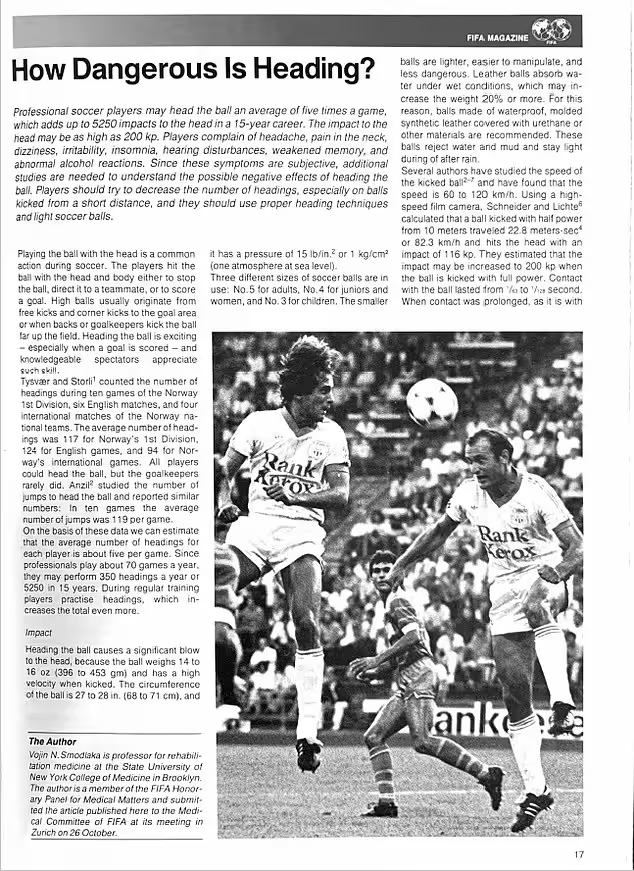 Is brain trauma in football a recent problem, or has it simply been overlooked? It’s a combination of both.
FIFA (the International Federation of Association Football) was first aware of the alleged link between football and brain damage in 1984, following the publication of an article in FIFA magazine. The article, titled “How Dangerous Is Heading?” was presented to the FIFA Medical Committee at a meeting on 26 October 1984.
The governing bodies through practices, guidelines and protocols are now seeking to reduce brain trauma by limiting heading and trialling permanent concussion substitutions.
How do head impacts in football injure the brain?
Concussion occurs when an impact to the head or body sends a strong force to the brain, resulting in significant, acute brain injury. Symptoms include headaches, mental fogginess, changes in memory, balance, coordination, behaviour, irritability, and slowed reaction time. Over 90% of concussions are not associated with a temporary loss of consciousness, and more than 80% of concussions are diagnosed the next day or several days later.
Sub-concussion impacts occur when the force of the impact damages brain cell function, but a player does not experience any symptoms and the impact goes unnoticed. Repetitive, sub-concussive impacts cause injury to the fine blood vessels in the brain. This results in damage to the blood-brain barrier, a structure designed to protect the brain. When this structure is damaged by repetitive trauma, an abnormal ‘immune’ mediated inflammatory response is triggered with the production of neurochemicals. The neurochemicals and inflammatory response should be protective. However, the problem arises when the brain is subjected to repetitive impacts before the protective neurochemicals and inflammatory changes from the initial head injury have had time to return to normal.
Subsequent sub-concussions can then result in an abnormally exaggerated further production of neurochemicals and an exaggerated inflammatory response which is harmful to the brain, rather than protective. This instead damages the brain tissue and eventually leads to the irreversible death of brain cells. Over time, this abnormal inflammatory pathway, triggered by repeated head injuries in contact sports, eventually leads to changes in a brain protein called tau.
The tau protein which is found within cognitive brain cells normally stabilises brain cells to ensure they work efficiently and communicate effectively with other cognitive brain cells, so an individual can think and behave normally. When the tau protein becomes damaged, it can no longer stabilise the brain cells and they lose their ability to function efficiently and effectively. As the tau protein spreads around the brain, more and more brain cells, needed for thought and control of emotions and behaviour, are killed.
Brain injury is not specific to elite or professional football, it is very much part of amateur football. It can impact men, women and children, whatever age and fitness level. From the cages to the Camp Nou, the parks to the Parc des Princes. These brain injuries are also apparent and a risk in rugby and hockey.

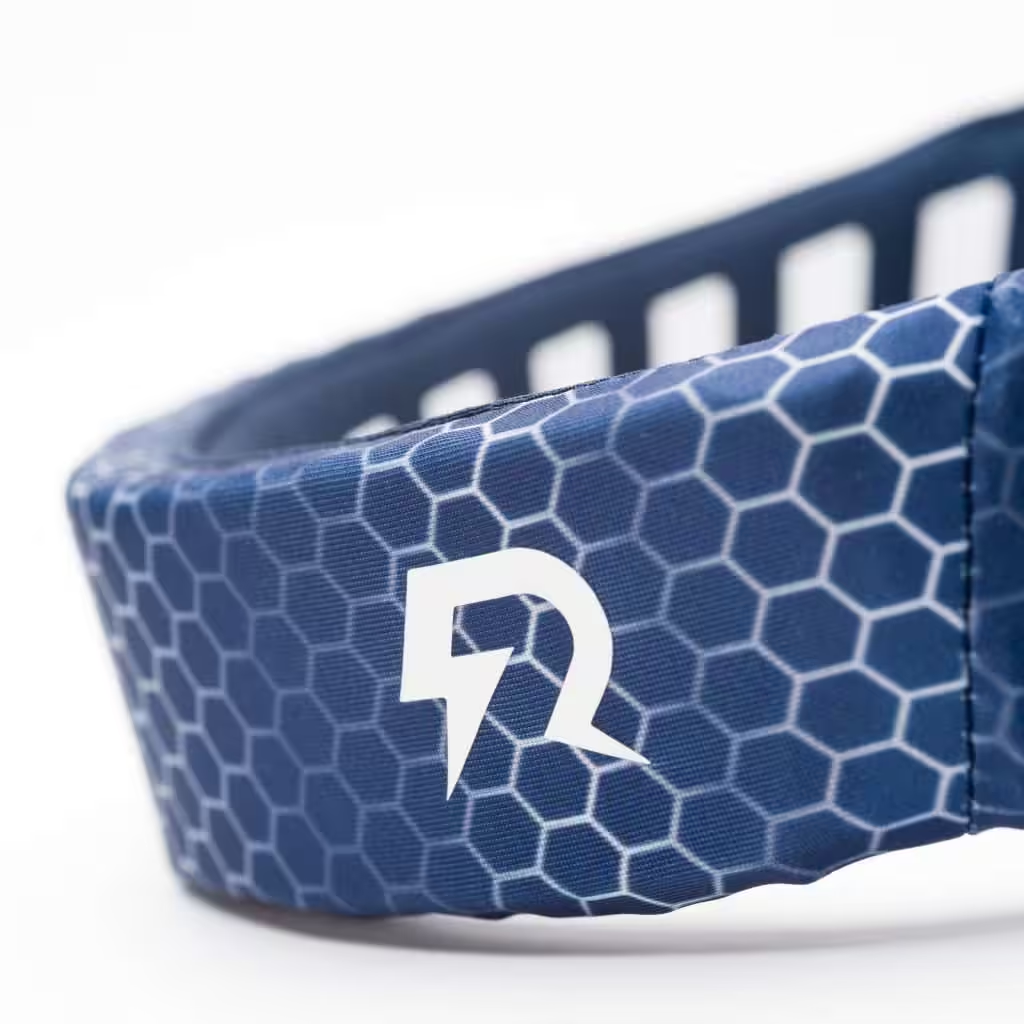
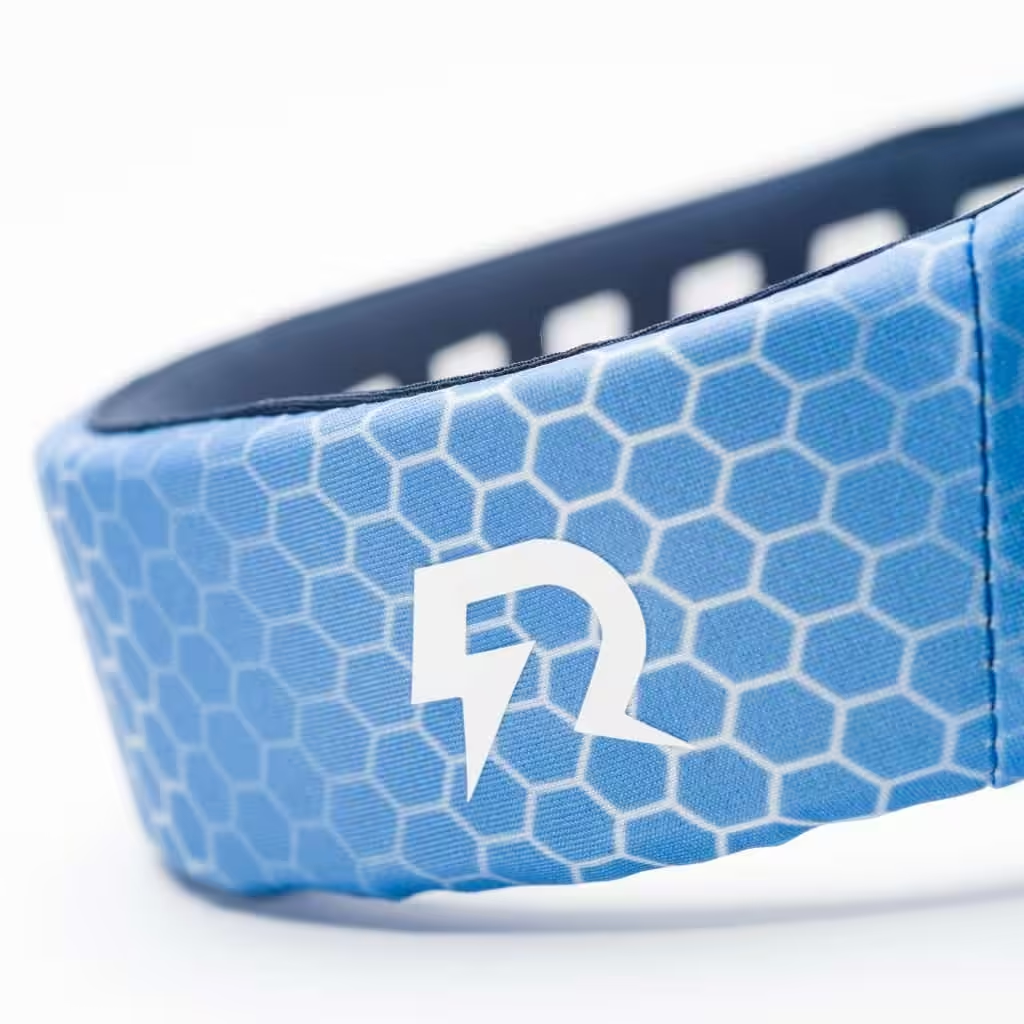
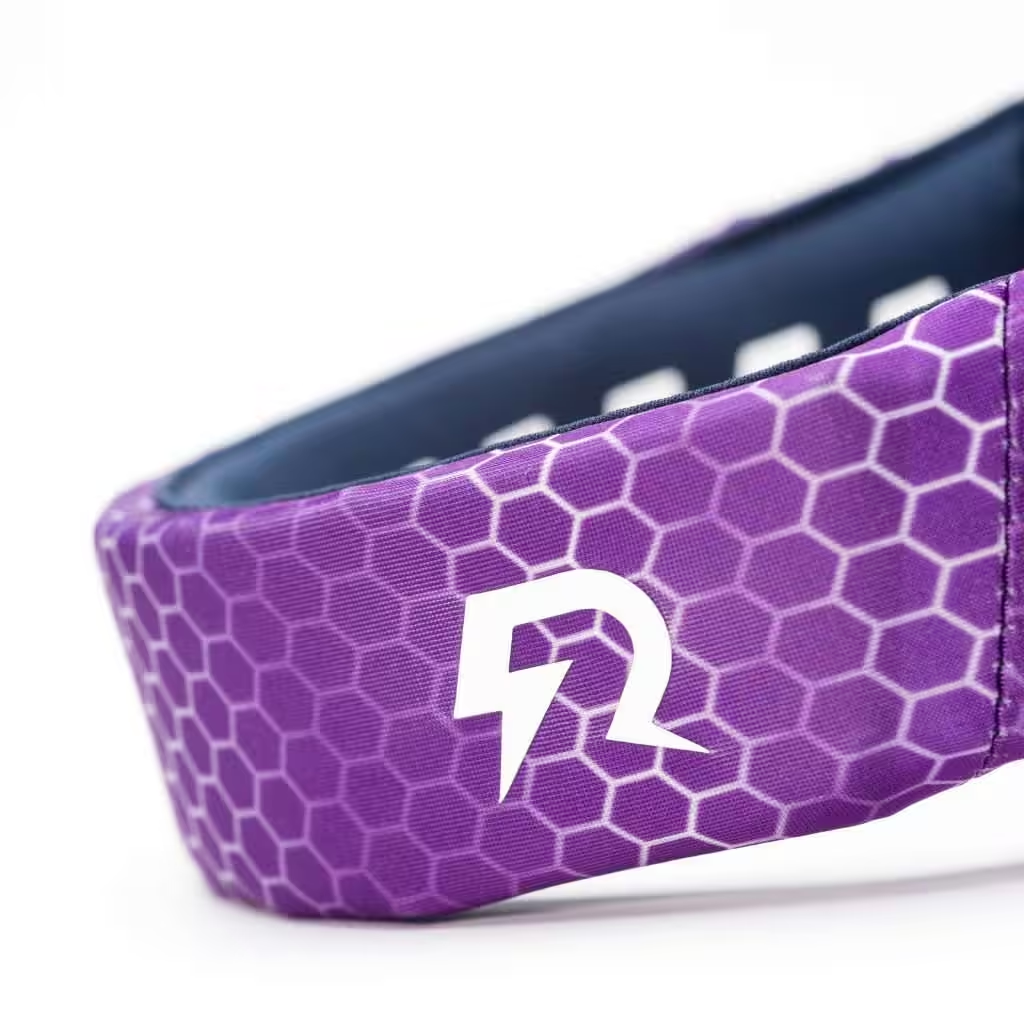
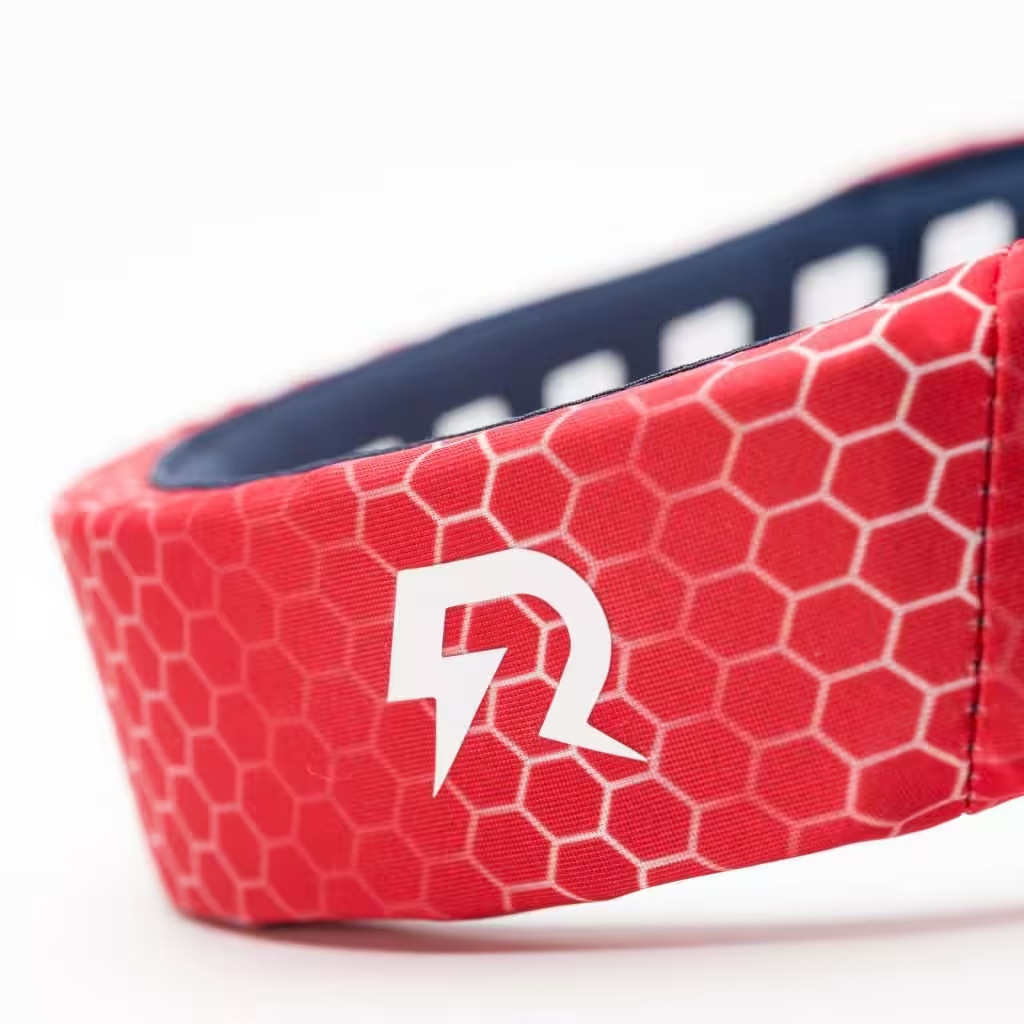
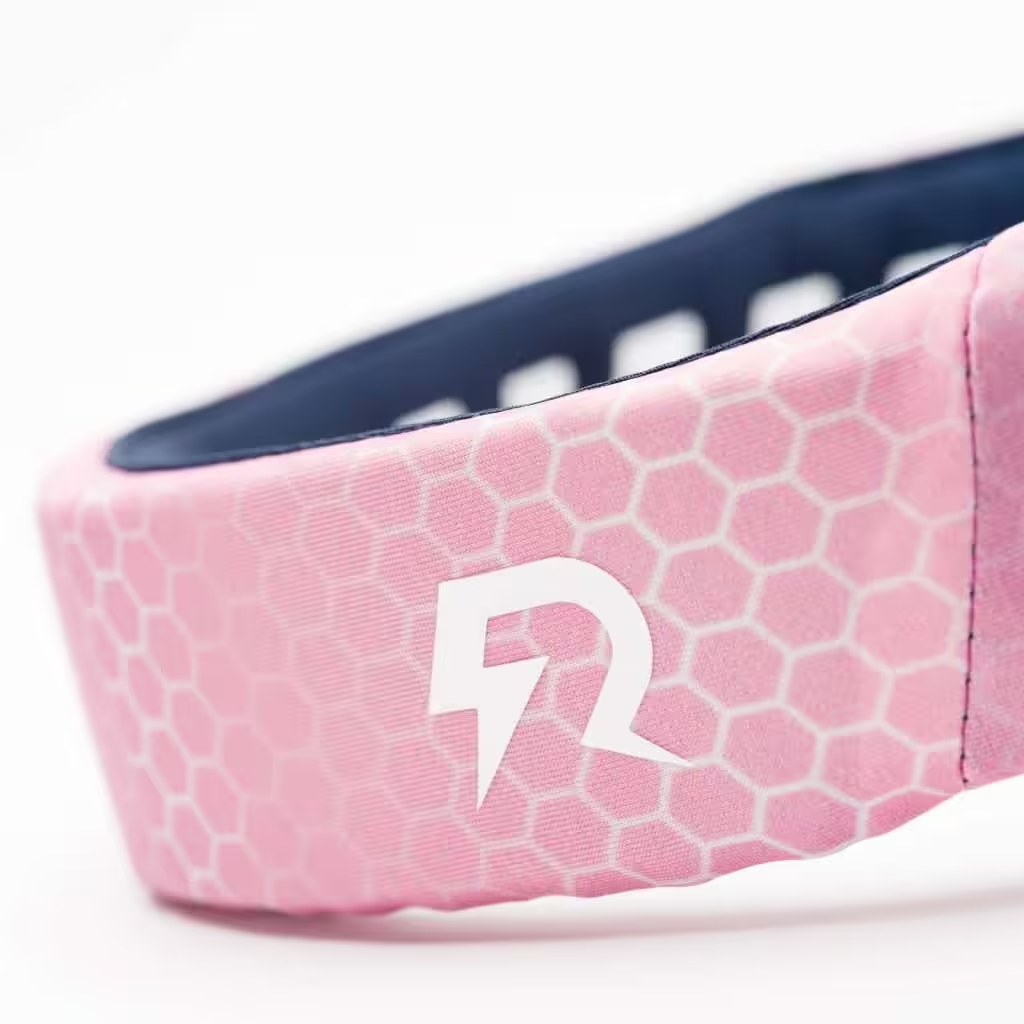
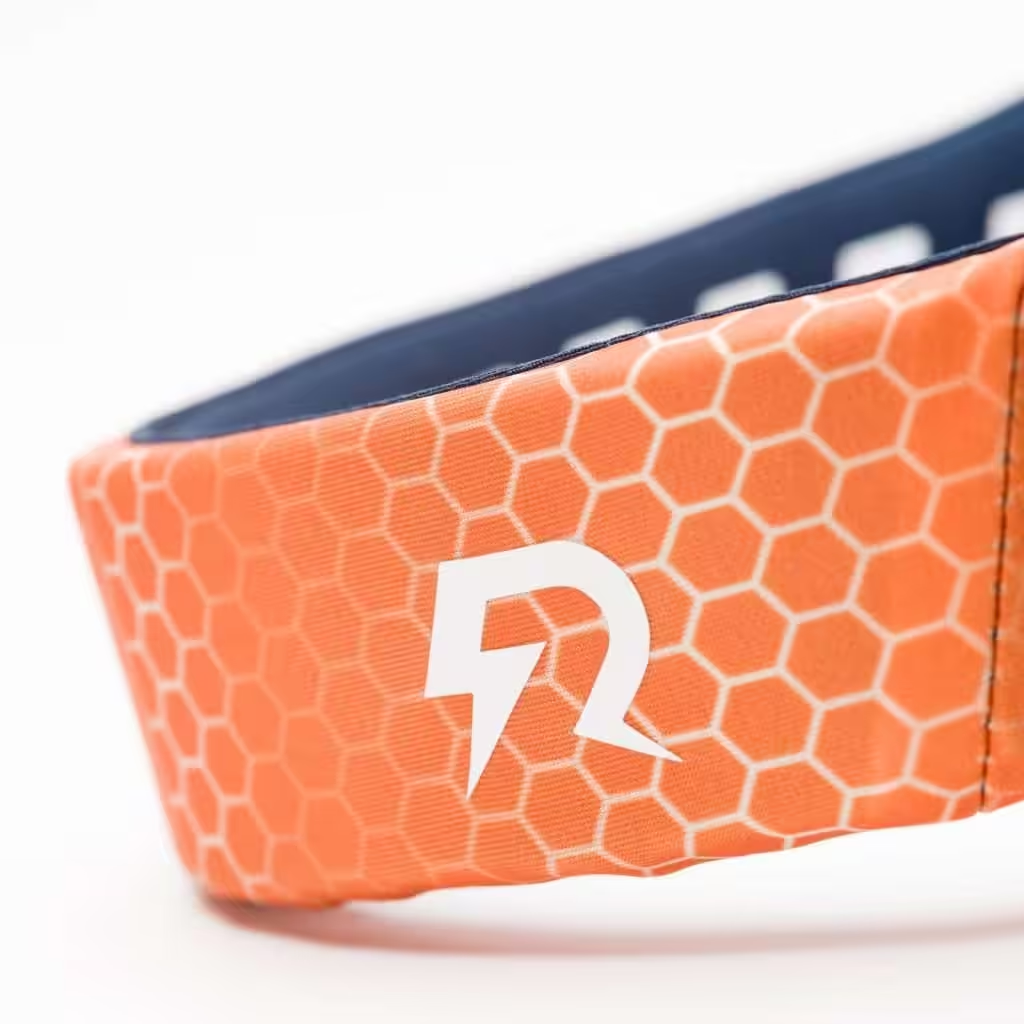
Rezon Halos®: Protecting Your Brain in Sport
Halos® is a groundbreaking sports headband that protects the brain. It’s the only headgear of its kind that is designed to reduce your risk of concussion and developing Chronic Traumatic Encephalopathy (CTE) from the accumulated damage of sub-concussions.
Why Halos®?
- Reduces concussion risk by 74%*
- Reduces rotational force to the brain by up to 61%, and linear force by up to 64%*
- Sleek, lightweight, flexible and hypoallergenic
- Water and tear-resistant
- Internationally recognised Virginia Tech 5 star safety rating
- The only CE/UKCA Category II PPE-certified protective headband – the UK and EU legal standard for protective headwear
*based on independent testing
As seen in





Limiting heading to reduce injury risk
The FA has issued guidelines that are specifically focused on heading in training sessions, recommending a maximum of 10 high-force headers (headers following a pass of more than 35 metres, including headers from free kicks, corners and crosses) are carried out in any training week. However, there is an argument that no category of header creates any less risk.
The Football Association (FA) has introduced a new rule aimed to phase out deliberate heading in grassroots youth (under-11 games and below) football games across England. Previously, FA guidelines banned headers in practice and training sessions for children under the age of 12. This new rule has been introduced after the International Football Association Board tested it out over two seasons. It started in the 2024-25 season with the ban in place in all under-7 to under-9 matches, and will expand to the under-10 level in 2025-2026 season, and the under-11s the season after. With the new rule, deliberately heading the ball will mean the opposite team are awarded an indirect free-kick.
In the US, similar rules around children not heading the ball have been in place since 2015. The heading of the ball for children aged 10 and under was banned after a lawsuit was filed against the US Soccer Federation by a group of concerned parents and players. The link between football and degenerative brain disease is a global concern.


Brain injury risks going beyond head-to-ball contact
The game is faster and more physical than ever, and there’s more at stake. Crosses and passes are struck with more power, and today’s professional trains for several hours at least five times a week.
But there is more to this than a glancing strike, a rising header from a set piece, or a diving header from a cross to clear the ball off the line. The real issue is rotational forces to the brain from concussive and sub-concussive impacts.
Rotational forces occur from angled hits to the head, be it head-to-head, head-to-ball, or head-to-ground impacts, all of which cause the brain to rotate inside the skull and brain cells to shear in a twist-like movement. Meaning brain trauma in football is more than heading.
Heading accounts for only 13% of impacts based on the study of mechanics of head impacts in football. 87% of angled impacts to the head come from other sources e.g., head to head, head to knee, head to elbow, foot and hand. How often do you see a player challenge for the ball with a goalkeeper’s fist rushing out to meet them? Or, two players flying into one another in a last-ditch slide tackle?
This better explains why CTE, a progressive brain condition caused by repeated impacts to the head, is recognised in sportsmen and women who have played many different contact sports, aside from football, and where heading is not present.
Focusing solely on heading encourages the confusion around brain injury, and fuels a debate that does not re-educate nor correctly better inform players, coaches, parents and fans on the risks of brain injury and CTE in football.
Symptoms of CTE
CTE symptoms can include mood changes, memory loss, confusion, poor judgement and slurred speech. However, symptoms of cognitive decline and subtle changes in behaviour can be very non-specific, especially in the early days of CTE.
How common is CTE in football players?
CTE has been diagnosed, clinically, in football.
Football players are subjected to less sub-concussive hits than rugby players. This explains why CTE in football is less common than in rugby, and that former football players develop CTE symptoms later, in their 50s and beyond.
The dangers of playing football with concussion
If a concussion is sustained while playing football, the player should be removed as soon as it is suspected. Those who continue to play after suffering a concussion are more likely to have a higher number of symptoms and more severe symptoms, compared to those who stopped playing immediately after their injury.
Research shows [3] those who played for just 15 minutes after sustaining a concussion took, on average, 25–28 days longer to recover than players who were removed immediately.
Trialling permanent concussion substitutions
The International Football Association Board (IFAB), at its Annual Business Meeting on 16 December 2020, approved a trial with additional permanent “concussion substitutes” for any competition wishing to take part (subject to The IFAB’s approval). The trial period ran until the end of August 2023. Following approval at the 138th Annual General Meeting (AGM) of The IFAB held on 2nd March 2024, the Laws of the Game now allow competitions to permit the use of additional permanent concussion substitutions.
 The Premier League was the first league in the world to begin trials for concussion substitutes on Saturday 6 February 2021. The Premier League concussion substitute law allows each team to make two permanent concussion substitutes if players have head injuries, assessed by qualified medics and even if all replacements have already been used.
The trial works on the following basis: If a player shows no clear signs of concussion they will be allowed to continue, but will be continually monitored by medics on the sidelines. The player will then undergo a formal clinical assessment at half time or full time to find out the extent of the injury. The opposing team is also allowed to make an additional substitution if a concussion substitute comes on to avoid one side gaining an advantage through fresher legs.
Permanent substitutions have been criticised on the basis that a player may feel pressure not to ask their manager to be subbed off despite experiencing a serious injury. Also, the club’s decision to let players continue playing following head impacts has been criticised, with Leeds United’s Robin Koch and Manchester City’s Phil Foden as recent examples.
There have been calls to IFAB for the implementation of temporary concussion substitutions, allowing a club’s medical team appropriate time to assess a player suspected of experiencing concussion and to make an informed decision as to whether that player should return to the game. IFAB has stated it has no plans to change the trial.
Other mitigations suggested for reducing brain trauma in football include for footballs to be sold with health warnings to better highlight the risk of heading to longer-term neurodegenerative disease, and to the outright banning of heading in football.
Concussion guidelines and management
In football, as many as 22% of all recorded injuries are concussions or head-related [4].
 When someone is suspected of having a concussion, either during training or in a game, FA Guidelines dictate that the player should immediately be removed from the pitch and not be allowed to return until the appropriate treatment has been administered. The FA advisory guidelines have been designed for those who manage head injuries in professional and grassroots football – from clubs and schools, to parents and doctors.
The FA guidelines do not reference sub-concussive impacts – the frequent smaller impacts that create accumulated sub-clinical brain injury and trigger longer-term neurodegenerative consequences. The risk and severity of CTE is caused primarily by multiple smaller, sub-concussive impacts, and not by one-hit concussions. 20% of people with CTE diagnosed after life were recorded as never having sustained a single concussion.
Brain injury happens at the microscopic level, c. 4,000 times smaller than the eye can see on a regular brain scan. So, with little pain, and no obvious physical injury, brain trauma in football really is a serious injury that is “hidden in plain sight” in football. This is very different from other more visible and painful injuries e.g. knee and ankle injuries. Brain injury isn’t isolated; you can’t apply ice, rest, then forget the impacts.
Returning to play following concussion
Graduated return to play (GRTP) protocol is a progressive program that introduces an individual back into sport step-by-step. The GRTP Protocol contains six distinct stages. Under the GRTP protocol, the player can advance to the next stage only if there are no symptoms of concussion at rest and at the level of physical activity achieved in the current GRTP stage.
Despite females being more susceptible to concussion and sub-concussions, experiencing worse and more prolonged symptoms, there are no specific return to play guidelines for female players.
GRTP is really an informed guess on how long it takes the brain to recover post-injury. Damage to the brain cells from an impact can be both immediate (damage to the brain cell structure) and delayed (blood flow changes or neural inflammation). Research and opinion from medical literature reviews suggests that 30 days is the minimum recommended rest period before returning to play post-concussion event.
Returning to play too soon can increase the risk of sustaining further injury and subsequent symptoms, requiring a prolonged period of recovery. Changes in white matter, brain connections and blood flow can persist a year or more after a concussion. Research [5] provides a significant association between a history of concussion and lower extremity injury, especially lateral ankle sprain, knee injuries and muscle strains. All athletes of all levels in sport have a greater risk of lower body injury issues for more than a year following a sport-related concussion. In some cases, this risk is as high as 67%.
Technological solutions
Eye-tracking technology
Eye-tracking technology is also being introduced to help with the detection and management of concussion. Studies have suggested that oculomotor function (eye movement) alters at the time of a concussion or shortly afterwards, including blurred vision, difficulty reading, difficulty tracking a moving target, and problems scanning visual information. This technology does nothing to reduce brain trauma or protect against concussion and sub-concussion. It is a measurement and management tool to facilitate identification of concussion, and is irrelevant to sub-concussion.
Saliva biomarkers
The Premier League are funding a study testing biomarkers in players’ saliva to detect if they have been concussed. As with many things in sport, the majority of research on brain injury is focused on males. So too, is much of the reaction. Note the Women’s Super League (WSL) is not funding a similar study.
All of these technologies focus on measuring and managing brain injury after it has happened. Whilst removing a player with concussion is becoming accepted, removing a player based on cumulative sub-concussions is unlikely to be popular or practical when the player has no symptoms, and the numeric threshold has not been proven.
Measuring brain patterns
Measuring brain patterns through electroencephalogram (EEG) technology is also being introduced to better spot and manage concussion. EEG tracks and records brain wave patterns. Localised brain activity is recorded via a number of metal electrodes. EEG brain testing is typically used for tracking and observing brain state changes post brain injury. This technology can identify concussions but does not support preventative care. In our partnership with Cogwear, we have taken EEG to the next level by measuring clinical-grade EEG to provide unprecedented brain injury detection. Halos Edge® is the world’s first athletic wearable with clinical-grade EEG.
Rezon’s answer to brain injury in football
The brain is at risk – not just to a single or high-force impact which triggers a concussion, but also to the multiple sub-concussive impacts which are invariably unnoticed and undetected in football. Every single impact to the head in training and playing has the potential to be career-ending and life-changing.
Whilst the effects of concussive brain injury may be instantly visible, repetitive sub-concussive brain injury over many years may not be recognised until later, meaning it is never too early to protect the brain in football.
The most significant mitigation to reduce brain trauma in football is to reduce the transmission of rotational forces to the brain, which is where Rezon is focused. Halos® headbands for concussions and sub-concussions are uniquely and intentionally designed to lessen the risk of rotational brain injury due to the reduction in the transmission of rotational forces to the brain from concussive and sub-concussive impacts.

1. Biomechanical investigation of head impacts in football, C Withnall, N Shewchenko, R Gittens, J Dvorak, 2005.
2. FA to trial removal of heading in U12 football, The FA, 2022.
3. Preliminary Evidence of a Dose-Response for Continuing to Play on Recovery Time After Concussion, Charek DB, Elbin RJ, Sufrinko A, Schatz P, D’Amico NR, Collins MW, Kontos AP, 2020.
4. Head and neck injuries in football (soccer), Al-Kashmiri, Ammar & Delaney, J., 2006.
5. The Influence of Sport-Related Concussion on Lower Extremity Injury Risk: A Review of Current Return-to-Play Practices and Clinical Implications, Jason M. Avedesian, Tracey Covassin & Janet S. Dufek, 2020.