Why are our brains dying before our bodies?
Repeated head impacts in sport cause cumulative changes to the brain that persist long after a player has stopped playing and can trigger neurodegenerative disease and premature death.
New research has found that the protective blood-brain barrier which acts as a “security gate”, letting in essential nutrients while keeping harmful toxins and inflammatory cells out can remain damaged or “leaky” for years after stopping from playing sport [1], while the largest study of NFL mortality found neurodegenerative mortality was nearly four times higher than expected, and more than 12 times higher among players who died before 60 [2].
In sport the greatest exposure to brain injury risk does not come from diagnosed concussions. It comes from repeated small-force impacts, sub-concussions, that cause no symptoms, receive no treatment and accumulate throughout training, competition and an entire sporting lifetime [3].
Dr Emer MacSweeney: Our Brains Are Dying Before Our Bodies
“Today, our brains are dying before our bodies.” [4]
Rezon’s brain-health expert Dr Emer MacSweeney explains one of the defining neurological challenges of our time: people are developing and dying from degenerative brain disease years or decades before the rest of their bodies would otherwise have failed.
For sport, the warning is particularly urgent.
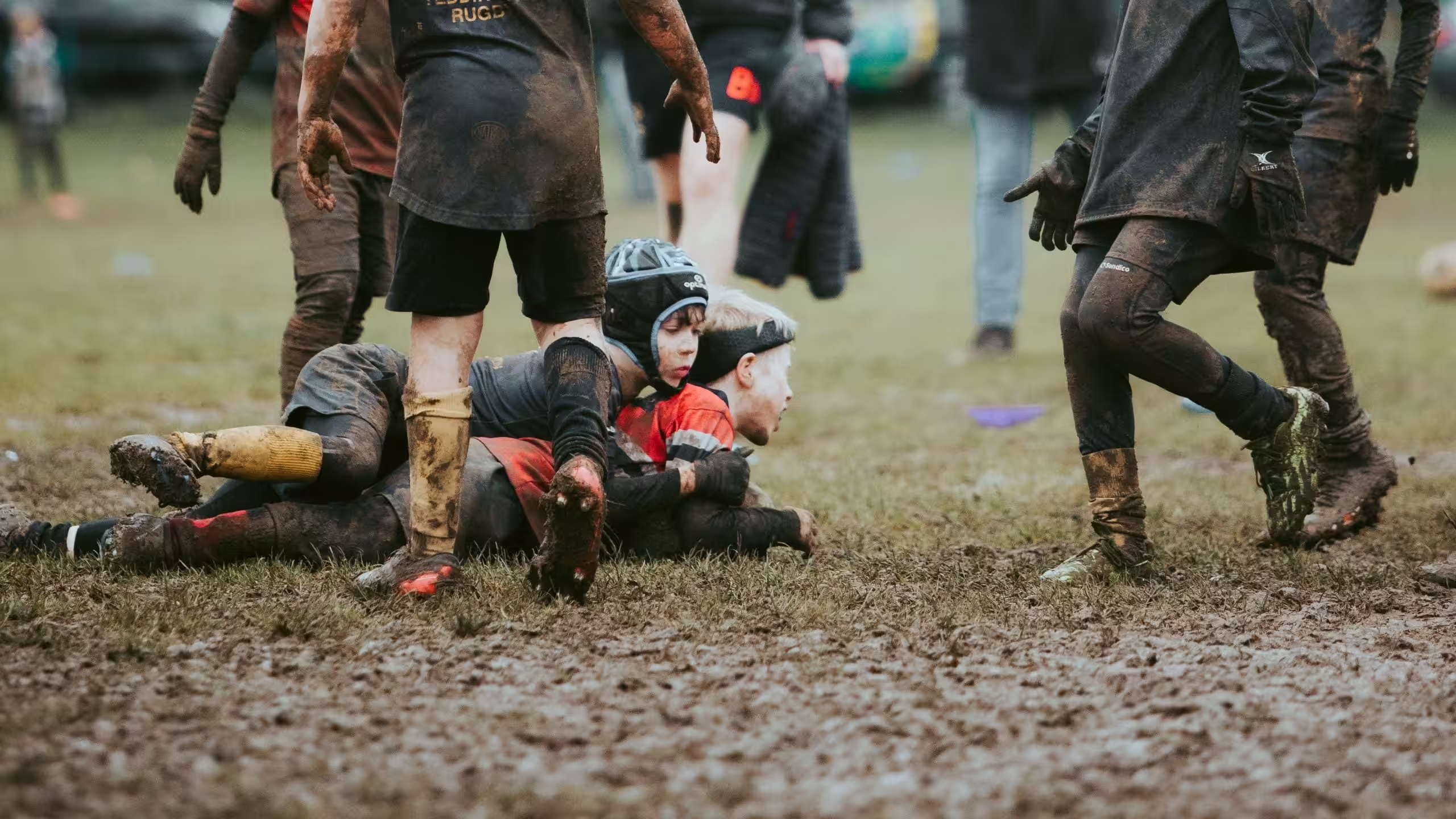
Repeated head impacts begin affecting the brain as soon as they first occur, which is most often in the form of sub-concussions in childhood. Damage accumulates across training sessions, matches, seasons and careers. Neurological symptoms may not appear until years later, when the underlying damage has already progressed towards neurodegenerative disease.
About Dr Emer MacSweeney
Dr Emer MacSweeney, BSc (Hons), MRCP, FRCR, is a Consultant Neuroradiologist, co-founder of Re:Cognition Health and a member of Rezon’s expert team [5].
Dr MacSweeney is an internationally recognised leader in brain health, with specialist experience in neuroimaging, cognitive impairment, neurovascular disease, traumatic brain injury, Alzheimer’s disease and repetitive brain trauma in contact sport.
She co-founded Re:Cognition Health to provide specialist neurological assessment, imaging and treatment. Its UK and US clinics are major centres for international trials of disease-modifying and symptomatic treatments for Alzheimer’s disease and other neurological conditions [5].
Neurodegenerative Disease Is Killing Players Young
Dr MacSweeney’s statement is not simply about living for longer with dementia. It is about people dying from brain disease at ages when they would not otherwise be expected to die.
That pattern can now be seen in major sports mortality data. A recent NFL study found players nearly four times more likely to die from neurodegenerative disease.
The 2026 study followed 19,824 former National Football League players, making it the largest fully enumerated study of NFL mortality undertaken to date. Neurodegenerative mortality among the players was 3.94 times higher than expected [2].
The results were even more severe among players who died young. Among NFL players who died before the age of 60, neurodegenerative mortality was 12.43 times higher than expected in the general population. Mortality from amyotrophic lateral sclerosis, the most common form of motor neurone disease, was more than 15 times higher, while dementia mortality was more than seven times higher [2].
The contrast with other causes of death was striking. NFL players had lower all-cause mortality and were less likely than the comparison population to die from cancer, cardiovascular disease and several other major causes. Yet their mortality from brain disease moved sharply in the opposite direction. In other words – their brains were dying before their bodies.
Sub-Concussions Are Sport’s Greatest Misunderstood Brain-Injury Risk
Recognising concussion, removing an affected player and managing their recovery correctly are essential. But concussion represents only the visible end of the brain-injury spectrum and the less frequent impacts.
The much larger brain-injury burden comes from sub-concussions.
A sub-concussion is a head impact that transmits force to the brain but does not produce the signs or symptoms required for a concussion diagnosis. There is no headache, dizziness, confusion or loss of consciousness. The player remains in training or competition and may receive another impact moments later [3].
- No diagnosis is made.
- No recovery period begins.
- No record of the injury may ever exist.
Sub-concussive impacts can occur up to 500 times more frequently than impacts resulting in diagnosed concussion. A player may experience hundreds or thousands of them across one season and potentially hundreds of thousands across a sporting life [6].
The significance is not simply their frequency. It is their accumulated mechanical and biological damage to the brain.
Research found that cumulative head-impact exposure, including the estimated number and intensity of impacts, was associated with both the presence and severity of CTE pathology. CTE is a progressive neurodegenerative disease. Models incorporating cumulative linear and rotational acceleration predicted CTE status and severity better than models based only on years played or the number of impacts. Reported concussion count was not associated with CTE status in the same analysis [7]. This changes the brain protection conversation.
The greatest long-term risk is not necessarily the number of times a player was concussed. It is the cumulative dose of mechanical force transmitted to the brain across all the sub-concussive impacts they will likely not remember, or even notice.
“The risk and severity of CTE is not caused primarily by single big-hit concussions, but by multiple smaller sub-concussive blows to the head and body. Failure to grasp this critical discovery is too common, and presents a huge issue in understanding how to tackle CTE.”
Dr Emer MacSweeney – CTE: The silent killer in contact sports | TEDxAthens [6]

Dr MacSweeney’s warning is clear: the risk and severity of CTE is associated primarily with repeated smaller-force sub-concussive impacts, not only with isolated big-hit concussions [6].
Failure to understand this distinction has left sport focused on identifying and focusing on a comparatively small number of symptomatic injuries while the greater volume of brain injury continues unnoticed.
How Repeated Head Impacts Damage the Blood–Brain Barrier
The blood–brain barrier is one of the brain’s most important protective systems. It is formed by specialised blood-vessel cells, tight junctions and supporting cells that regulate what can pass from the bloodstream into brain tissue. It allows oxygen and essential nutrients to enter while restricting pathogens, toxins, inflammatory cells and other potentially damaging substances [8].
When head impacts occur in sport, rotational forces cause the brain to rotate inside the skull. This is associated with tearing of tiny blood vessels and brain cells resulting, over time, in the breakdown of the blood-brain barrier [9].
When the blood brain barrier is functioning properly, it serves to protect the brain. Repeated sub-concussions in sports head impacts can progressively overwhelm this protective barrier [10].
This is why cumulative exposure has become such an important concept. The risk is not only the single dramatic collision or the concussion causing impact. It is the repeated sub-concussive loading of the brain over time. A routine tackle, clash, fall, header, elbow, knee, scrum, ruck, punch or body-check may seem unremarkable in isolation. Across years, those sub-concussive exposures add up to brain damage.
Repeated Head Impacts Leave the Blood–Brain Barrier “Leaky” for Years
The effects of repeated sub-concussive head impacts do not necessarily stop when the match ends, the symptoms settle or the player retires. Research found measurable blood–brain barrier disruption in retired combat-and collision-sport athletes exposed to repetitive head trauma [1].
Using advanced dynamic contrast-enhanced MRI, researchers detected blood–brain barrier abnormalities years after the athletes had stopped participating in contact sport. More extensive disruption was associated with cognitive decline, immune-system changes and markers of inflammation [1].
The brain’s protective barrier can remain “leaky” for years after athletes stop playing contact sport [11]. This is crucial.
It demonstrates that repeated head impacts can leave a measurable biological trace long after the original exposure. Brain injury is not defined only by whether a player appeared concussed at the time. Nor is it necessarily resolved because the player completed a return-to-play protocol or ended their sporting career. The brain may remain biologically altered for years.
Evidence of measurable changes is not confined to retired professional athletes either. Brain-imaging studies have also found changes following much shorter periods of exposure in amateur and youth players. A study of youth American football players aged eight to thirteen found an association between cumulative head-impact exposure and changes in specific white-matter tracts across a single season, even though none of the children had been diagnosed with concussion [12].
More recent imaging research involving 165 former American football players found associations between white-matter microstructure, earlier age of first exposure and greater estimated cumulative impact burden. Higher estimated cumulative linear acceleration and rotational force were associated with altered tissue-corrected white-matter measures [13].
The evidence spans different ages and stages of participation:
- measurable brain changes can appear during childhood;
- cumulative exposure continues through training and competition;
- blood–brain barrier disruption can remain detectable years after retirement; and
- neurodegenerative disease may emerge decades after the original impacts.
This is the persistent damage that helps explain Dr MacSweeney’s warning.
Repeated head impacts can begin changing the brain years before neurological disease is diagnosed. Those changes can remain long after participation ends and may contribute to the pathological processes associated with players dying from neurodegenerative disease years before their bodies would otherwise have died.
When Persistent Brain Damage Becomes Neurodegeneration
Not every player exposed to repeated head impacts will develop neurodegenerative disease. Individual risk is influenced by total exposure, impact intensity, age at first exposure, genetics, biology and other health and environmental factors [3].
But the diseases identified at disproportionate rates in some contact-sport populations are progressive, life-changing and ultimately fatal.

Protecting the Brain Before Damage Accumulates
The strongest opportunity to reduce cumulative brain injury is before a player has absorbed years or decades of repeated rotational force and sub-concussive exposure.
That means beginning in youth sport.
Children begin receiving sub-concussive head impacts during their first seasons of rugby, football, hockey, lacrosse, basketball, netball, combat sports or other activities and school sports involving collisions and falls.
They may have an entire lifetime of sporting participation ahead of them. Their brains are still developing, and they depend on parents, coaches, teachers, schools and governing organisations to make protective decisions on their behalf.
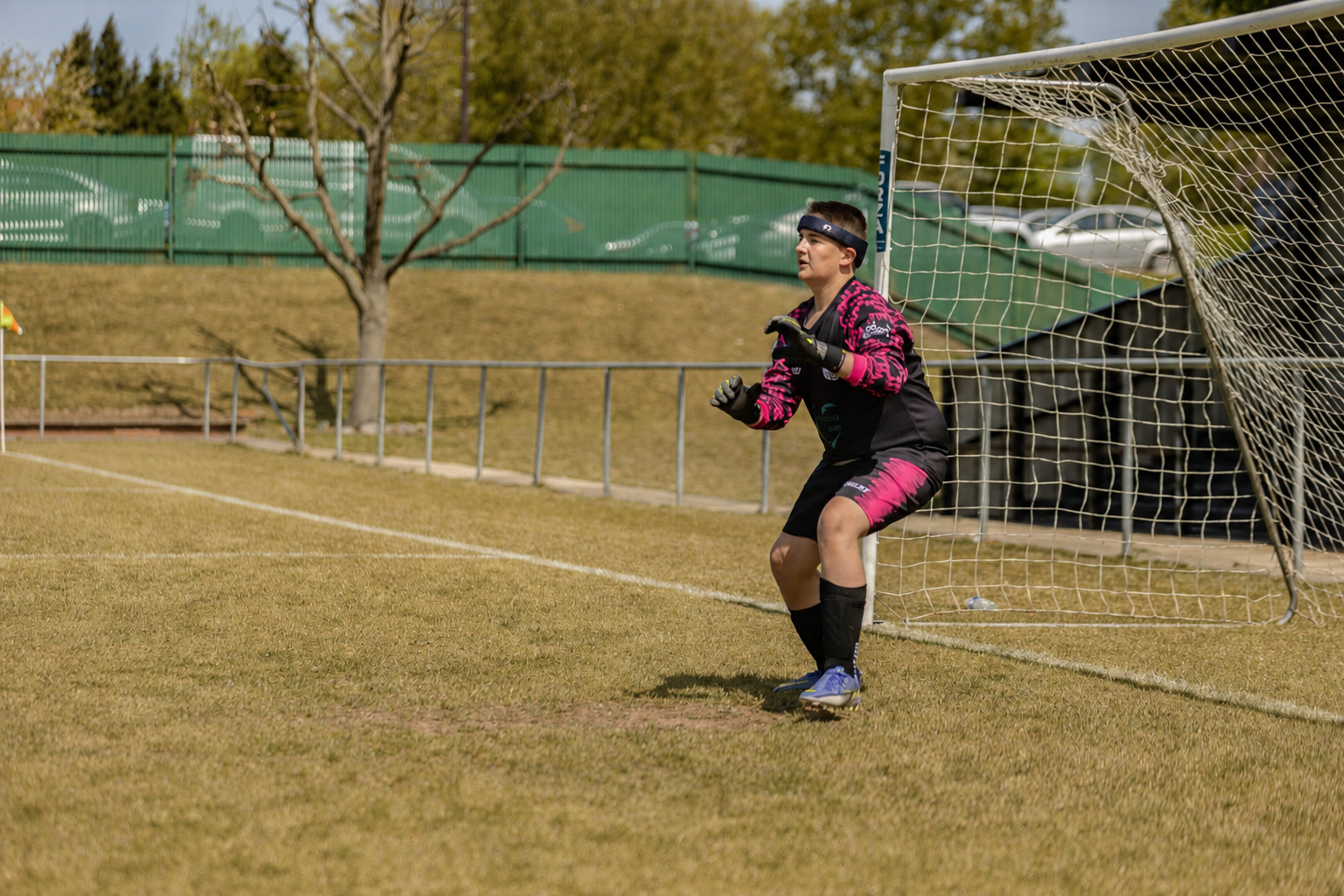
Rezon Halos® was developed specifically to address the rotational forces transmitted to the brain during concussive and sub-concussive head impacts and reduce the accumulated damage from sub-concussions.
Halos® uses patented Rotection® technology, a system of nine protective layers designed to move relative to one another during impact and reduce the transmission of rotational force [15].
Independent testing found that Rezon Halos®:
- reduced rotational acceleration by up to 61%
- reduced linear acceleration by up to 64%;
- achieved a Virginia Tech 5-Star safety rating;
- achieved a 74% reduction in concussion risk across the tested impact conditions; and
- holds CE and UKCA Category II PPE certification [16, 17].
The responsible objective is to reduce what can be reduced. Across one impact, a reduction in rotational force is meaningful. Across hundreds or thousands of sub-concussive impacts, reducing the cumulative dose of rotational force and sub-concussive damage becomes even more important.
Concussion protocols begin after symptoms appear. Brain protection must also begin before concussion occurs.

- Blood-brain barrier disruption, traumatic encephalopathy, and repetitive head trauma in athletes. Greene C, et al. Science Translational Medicine. 2026
- Neurodegenerative mortality among National Football League players. Luster CB, Abdolmohammadi B, Mastrodicasa MJ, et al. EClinicalMedicine. 2026
- About Repeated Head Impacts. Centers for Disease Control and Prevention. 2024.
- Our Brains Are Dying Before Our Bodies. Dr Emer MacSweeney. Rezon Expert Team.
- Dr Emer MacSweeney: BSc (Hons), MRCP, FRCR, Consultant Neuroradiologist. Further Reading. Rezon.
- What are sub-concussions and how do they impact long-term brain function?. Further Reading. Rezon.
- Leveraging football accelerometer data to quantify associations between repetitive head impacts and chronic traumatic encephalopathy in males. Daneshvar DH, Nair ES, Baucom ZH, et al. Nature Communications. 2023.
- The blood–brain barrier in health and disease: Important unanswered questions. Profaci CP, Munji RN, Pulido RS, Daneman R. Journal of Experimental Medicine. 2020.
- Rotational acceleration, brain tissue strain, and the relationship to concussion. Post A, Hoshizaki TB. Journal of Biomechanical Engineering. 2015.
- Neuroinflammation and blood–brain barrier disruption following traumatic brain injury: Pathophysiology and potential therapeutic targets. Sulhan S, Lyon KA, Shapiro LA, Huang JH. Journal of Neuroscience Research. 2020.
- Brain’s protective barrier stays leaky for years after playing contact sports. Kozlov M. Nature. 2026.
- Subconcussive head impact exposure and white matter tract changes over a single season of youth football. Bahrami N, Sharma D, Rosenthal S, et al. Radiology. 2016.
- Dose-dependent white matter changes associated with repetitive head impacts in former American football players. Arciniega H, Wickham A, Szekely B, et al. Brain Communications. 2026.
- The neuropathology of chronic traumatic encephalopathy. McKee AC, Stein TD, Kiernan PT, Alvarez VE. Brain Pathology. 2015.
- How Rezon’s Brain Protection Technology Works. Further Reading. Rezon.
- International, Independent, Legal Certification: Rezon Halos® Product Testing. Further Reading. Rezon.
- Soccer Headgear Ratings. Rezon Halos®: 5-Star rating; STAR value 0.26. Virginia Tech Helmet Lab.
Author: Judith McMinn