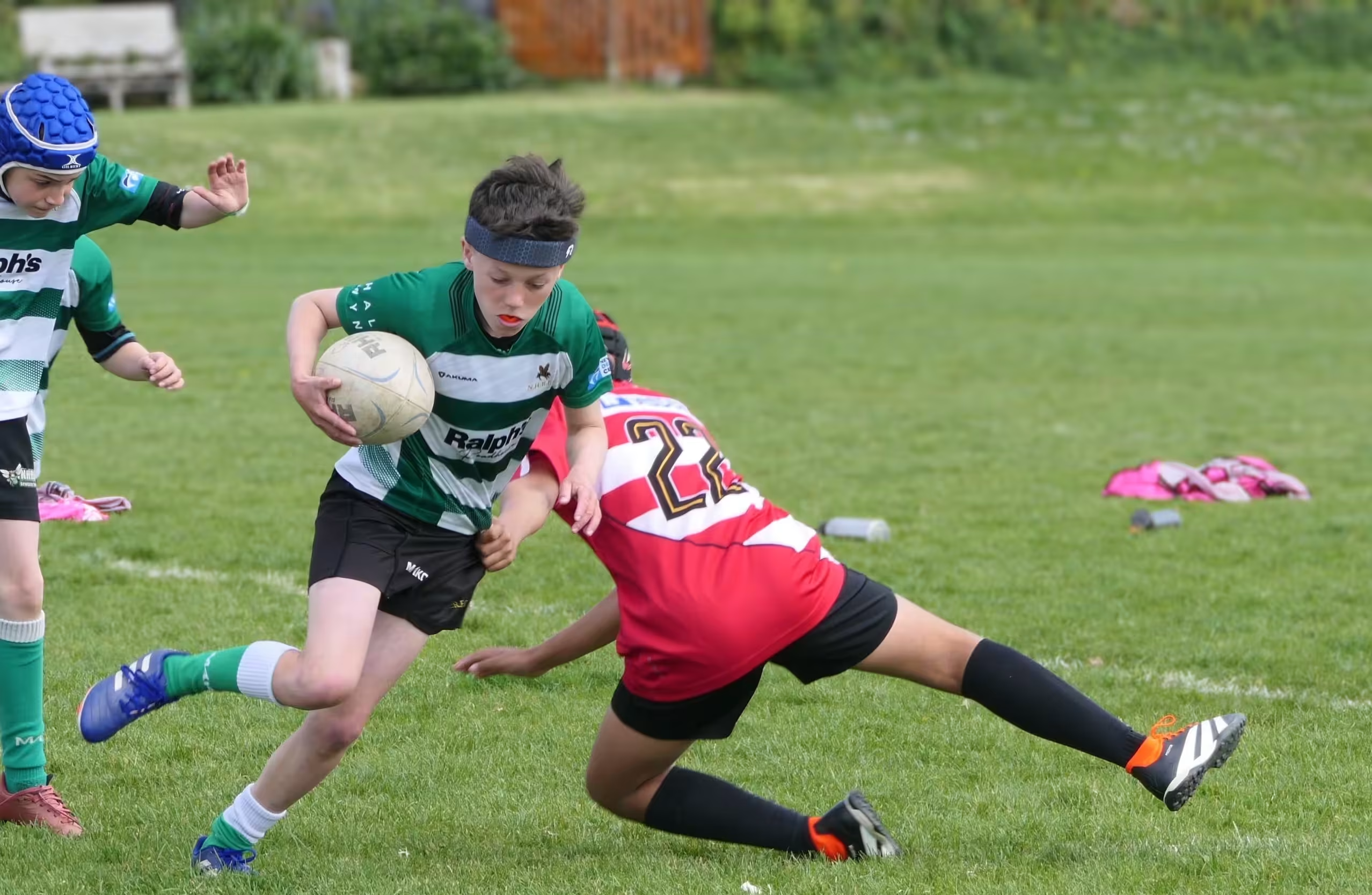
Suicide, Sport and Chronic Traumatic Encephalopathy (CTE): The Link We Can No Longer Ignore
Suicide in sport is almost always framed as a mental health issue. Chronic Traumatic Encephalopathy (CTE) is discussed as a neurological disease. Too often, these conversations run in parallel rather than intersecting. When they do cross, there is a suggestion that ‘awareness’ of CTE contributes to player suicides, in that former players may choose suicide because they fear they have CTE, rather than due to the life consequence resulting from CTE [1].
The science is clear that this separation between CTE and suicidality is artificial.
A growing body of neuropathological evidence shows that CTE, caused by repetitive head impacts, is associated with changes in mood, behaviour, emotional regulation and impulse control; all factors known to increase vulnerability to suicide.
Yet as recently as 2022, clinicians and researchers affiliated with the Concussion in Sport Group meeting, which was underwritten by international professional sports organisations, claimed, “It is not known whether CTE causes specific neurological or psychiatric problems.”
CTE does not act in isolation, and suicide is never caused by one factor alone. But to deny the biological contribution of repeated concussive and sub-concussive brain injury is no longer credible.
What the science actually shows
In the largest longitudinal study over 35 years, individuals with medical contact for traumatic brain injury, compared with the general population without traumatic brain injury, had an increased risk of suicide, with an incident rate ratio of 1.90 [2].
CTE is a progressive neurodegenerative disease characterised by abnormal accumulation of tau protein in the brain. It develops through cumulative exposure to repetitive head impacts, the majority of which are sub-concussive; small-force impacts that produce no visible concussion signs or symptoms but still damage brain tissue over time [3].
Neuropathological studies show that CTE disproportionately affects regions of the brain responsible for:
- emotional regulation
- impulse control
- judgement and decision-making
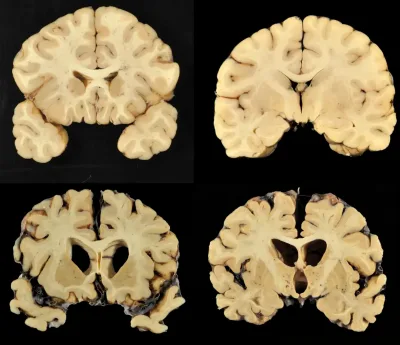
Damage to these systems is associated with depression, emotional volatility, impulsivity and behavioural dysregulation; all established risk factors for suicide. A comprehensive review of the literature notes that while CTE cannot be said to cause suicide, it is increasingly recognised as a biological contributor that may increase vulnerability, particularly when combined with psychosocial stressors [4].
As Dr Emer MacSweeney, consultant neuroradiologist and CEO of Re:Cognition Health, explains, CTE is driven by repeated symptomless (sub-concussive) head impacts, not by isolated concussions, and its effects on mood and behaviour can be profound long before cognitive decline becomes obvious [5].
Zac Easter and Wyatt Bramwell: a common mechanism
The cases of Zac Easter and Wyatt Bramwell illustrate this intersection with devastating clarity.
Zac Easter, a former American football player, died by suicide at 24. He had experienced years of mood instability, memory problems and emotional dysregulation following repeated head impacts sustained during sport. His story is frequently referenced in expert discussions on CTE because it demonstrates how brain injury can alter behaviour and emotional control in young adults.
Wyatt Bramwell’s case is even more confronting. Wyatt began playing American football at age six. He died by suicide at 18. Post-mortem examination revealed stage 2 CTE, making him one of the youngest confirmed cases on record [6].
These cases share a common mechanism: repetitive rotational forces from sub-concussive impacts to the brain over time, beginning in youth sport.
This is not about inevitability; it is about risk
Not every athlete with CTE will experience suicidal thoughts. Not every suicide in sport is linked to brain injury.
Suicide is multifactorial, influenced by social, psychological, genetic and environmental factors.
But the presence of CTE-related neuropathology reduces neurological resilience. It impairs the brain’s ability to regulate emotion and impulse at moments of stress. In that context, brain injury becomes a risk multiplier, not a footnote.
Ignoring that biology does not protect athletes. It abandons them.
Why protection matters more than ever
Sport’s response to brain injury has focused overwhelmingly on reaction: concussion recognition, removal from play, symptom management and return to play protocols after brain injury has occurred.
This approach does nothing to address the accumulated damage of sub-concussive impacts, which are now understood to be the primary driver of long-term brain injury risk [7].
Every head impact involves rotational forces. These forces tear brain cells and blood vessels, trigger neuro-inflammation, and contribute to the pathological cascade seen in CTE. Measurement after the fact does not protect the brain. Rule changes alone address only part of the exposure.
The most meaningful protective mitigation is clear: reduce the transmission of rotational forces and the cumulative burden of sub-concussive impacts, across all sports, all ages and all levels of play.

A responsibility sport can no longer avoid
The link between repeated head impacts, CTE and increased vulnerability to suicide is not sensationalism. It is an uncomfortable but necessary truth grounded in neuroscience.
If sport continues to frame suicide purely as a mental health issue while ignoring the biological damage caused by repetitive brain trauma, it is choosing convenience over evidenced truth.
We now understand the mechanism. We understand the risk. We understand that exposure begins in childhood.
What remains is a decision about offering every player the option of brain protection, and strongly encouraging use as early as possible in childhood.
- Participation in Professional American-Style Football and Suicide Mortality: 1979–2019. Rachel Grashow, Niki Konstantinides, Benjamin C. Anderson, Michael Leung, Eric N. Fung, Aaron L. Baggish, Daniel H. Daneshvar, Wayne Grove, Ross Zafonte, Marc G. Weisskopf, 2026
- Association Between Traumatic Brain Injury and Risk of Suicide. Traumatic Brain Injury. JAMA Network.
- What are sub-concussions? Further Reading. Rezon.
- Brain. McKee et al. 2013.
- What a world-leading neuroradiologist wants you to know about CTE. Re:Cognition Health.
- Football at Six. Brain Disease at Eighteen. Dead. Dx: CTE. Dr. Patricia Farrell.
- Brain injuries in football. Further Reading. Rezon.
Author: Judith McMinn